
AI Customer Journey Analytics: Complete Guide for 2026

Last Updated: March 24, 2026
The Bottom Line
- AI customer journey analytics reveals hidden conversion patterns across millions of touchpoints that humans cannot spot manually
- Privacy-first approaches deliver accuracy and compliance without surveillance, building customer trust and reducing legal risk
- AI automation translates insights into action, automatically triggering workflows, emails, and revenue recovery initiatives
- The market is growing 35 billion by 2030, with 78% of organizations already using AI for marketing and sales optimization
What Is AI Customer Journey Analytics?
AI customer journey analytics combines customer interaction data across every touchpoint with artificial intelligence to predict behavior, identify opportunities, and recommend actions in real time. It's the difference between knowing what happened and knowing what comes next.
Traditional analytics answer historical questions: Which channels drove traffic? When did customers drop off? What was the conversion rate? These insights matter, but they're reactive. You're analyzing the past while your competitors are shaping the future.
AI transforms customer journey analytics by adding three critical capabilities. First, pattern recognition at scale: machine learning algorithms identify behavioral sequences and micro-segments that humans would never spot in raw data. Second, predictive intelligence: instead of reporting what occurred, AI forecasts which customers will churn, which are ready to upgrade, and which need intervention today. Third, automated recommendations: the system suggests specific actions (personalized messaging, timing adjustments, channel shifts) designed to move customers forward.

Why does this matter now? The customer journey analytics market is projected to surpass 35 billion by 2030, driven by increasing demand for real-time personalization and unified customer data platforms. Businesses that wait risk falling behind. Those implementing AI-powered analytics today are already capturing market share by delivering what customers expect: timely, relevant experiences based on their actual behavior, not assumptions.
The Three Ways AI Transforms Customer Journey Analytics
AI fundamentally changes what's possible in customer journey analytics by handling three critical tasks that manual analysis simply can't scale. These capabilities work together to transform raw data into competitive advantage.
Pattern Recognition at Scale
The first capability is identifying meaningful patterns across millions of customer journeys. AI systems identify meaningful patterns across millions of journeys, a task that risks human analysts overlooking nuanced changes. A human analyst might spot obvious trends in a subset of data, but AI detects subtle correlations that predict behavior: the specific sequence of three pages visited before checkout abandonment, the time-of-day patterns that signal intent, the micro-segments that respond differently to the same message. These patterns matter because they reveal why customers succeed or fail, not just that they do.
Predictive Journey Mapping
The second capability moves beyond description to prediction. AI predicts what will happen next based on statistically sustainable trends in the data, allowing marketers to anticipate needs based on customer activity. Instead of reacting to completed journeys, you're positioning resources before the customer reaches a critical decision point. This shifts your team from analyzing what happened yesterday to preventing churn or enabling conversions today.
Automated Insight Generation
The third capability eliminates the analysis bottleneck. AI can automatically translate analytics into clear, prioritized actions, flagging systemic issues and proposing process automation instead of teams spending weeks debating where to focus. Instead of waiting for reports, stakeholders get actionable recommendations immediately.
All three capabilities work best within a privacy-first framework. Privacy-first analytics prioritizes protection of individual privacy as core design constraint, reducing exposure under GDPR and CCPA while serving as competitive differentiator. This means you're building customer understanding from behavioral patterns, not personal data collection, which actually improves data quality and compliance simultaneously.
From Insights to Action: How AI Automation Drives Revenue Recovery
The real power of AI customer journey analytics isn't just understanding what happened. It's automatically acting on what you've learned before the moment passes.
Traditional analytics create a reporting lag. You analyze yesterday's data today, plan tomorrow, and act next week. By then, the customer who abandoned their cart has already left. The at-risk subscriber has already canceled. The opportunity is gone.
Privacy-first AI changes this equation by identifying revenue leaks in real-time and triggering immediate responses. When a customer abandons a high-value cart, AI doesn't wait for a manual review. It instantly recognizes the friction point, evaluates the customer's historical behavior, and deploys a personalized recovery sequence. Maybe it's a targeted email with a limited-time incentive. Maybe it's a workflow that surfaces the abandoned items across their preferred channel. The automation happens within seconds, not days.
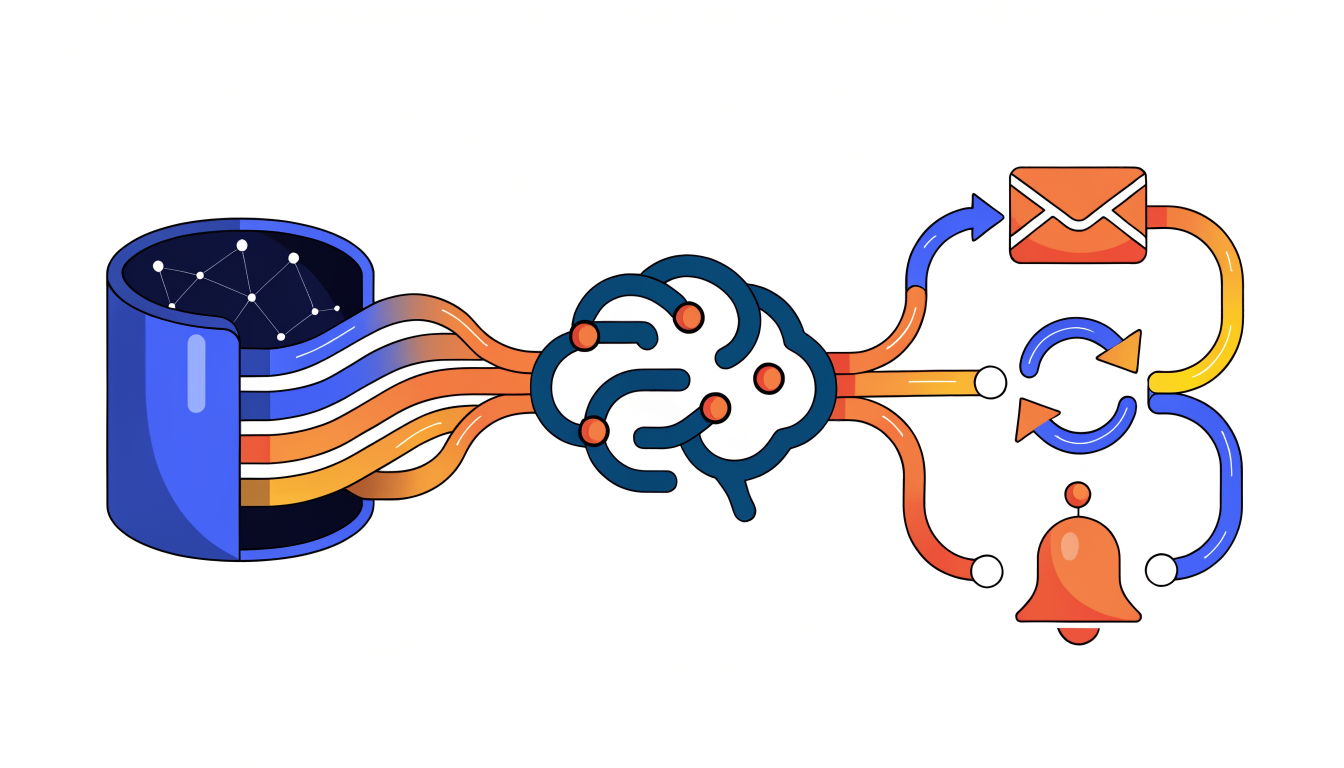
Churn prevention works the same way. AI identifies customers showing early warning signs (declining engagement, reduced purchase frequency, negative sentiment) and automatically activates retention workflows before they're gone. These aren't generic offers. They're personalized based on what that specific customer values, when they're most likely to respond, and through their preferred communication channel.
The business impact is measurable. Revenue recovery from abandoned carts increases significantly when activation happens within hours, not days. Churn prevention becomes proactive rather than reactive. And because these actions are automated and privacy-compliant, your team focuses on strategy instead of manual campaign management.
Privacy-First Analytics: The Foundation for Sustainable Growth
The shift toward privacy-first customer journey analytics isn't a compliance burden; it's a competitive advantage. Here's why: when you stop relying on third-party cookies and invasive tracking methods, you actually get better data. First-party data collected directly from customer interactions is more accurate and easier to obtain consent for than the fragmented information brokers sell you anyway.
Your customers notice when you respect their privacy. Brands that embrace privacy-first approaches build stronger relationships and see measurable improvements in conversion rates and loyalty. This isn't sentiment; it's business. People are tired of being tracked across the web, and they reward companies that don't do it.
From a regulatory standpoint, privacy-first design means GDPR and CCPA compliance is built into your architecture from day one, not bolted on afterward. That eliminates the legal risk and the six-figure fines that come from reactive compliance efforts. You're protected by design, not by hope.
The technical foundation matters too. True privacy-first analytics means no fingerprinting, no persistent individual tracking, and minimal data retention. Your system analyzes behavior patterns and trends without maintaining detailed profiles on specific people. You still understand your customer journey completely; you're just doing it responsibly.
The companies winning in 2026 aren't those holding onto deprecated tracking methods. They're the ones who realized that respecting privacy and optimizing customer experiences aren't opposing forces. They're aligned. Your analytics become cleaner, your compliance becomes automatic, and your customers trust you more. That's not a trade-off; that's the future.
Choosing the Right AI Customer Journey Analytics Platform
Selecting the right platform is where theory meets reality. Your choice will determine whether you're making decisions based on complete customer context or fragmented data that leaves you guessing.
Start with integration capability. A strong journey analytics tool must pull data from every relevant source: websites, mobile apps, email, call centers, in-store systems, and CRM platforms to enable a complete, accurate picture. If your platform can't connect these channels, you're working with blind spots. Ask vendors directly about their integration library and how quickly they can add new sources as your tech stack evolves.
Real-time processing separates platforms that help you respond versus those that only explain what already happened. You need insights flowing in fast enough to trigger immediate action, not reports that arrive too late to matter.
Next, evaluate AI capabilities honestly. Pattern detection and predictive analytics should feel intuitive, not buried in technical menus. Can the platform recommend next actions automatically? Does it surface anomalies before they become problems? The best tools don't just analyze past behavior; they anticipate what comes next.
Automation features matter enormously. Your platform should trigger workflows, personalized emails, and customer segments without manual intervention. This is where AI translates into business velocity.
Finally, prioritize privacy compliance above all else. In 2026, first-party data focus isn't optional; it's foundational. Verify that any platform you consider operates within your regulatory requirements and respects customer consent frameworks. Ask about their data governance approach and how they handle data retention.
Don't get distracted by flashy dashboards. Focus on what actually drives results: integration depth, processing speed, actionable AI, and rock-solid privacy practices.
Common Questions About AI Customer Journey Analytics
Let's tackle the questions keeping you up at night about implementing AI customer journey analytics.
How do I actually measure ROI? Start with what matters most to your business. You can measure ROI through customer lifetime value improvement, conversion rate enhancement, customer acquisition cost reduction, retention and loyalty metrics, and time to value. Don't wait for perfect attribution; track incremental improvements in these metrics month-over-month. Most teams see measurable gains within 90 days.
How long does implementation take? Expect 4 to 12 weeks for a solid foundation, depending on your data infrastructure. You don't need a perfect setup from day one. Start with your highest-priority customer segments and expand gradually. Quick wins in the first month build internal momentum and justify further investment.
What data do I need? You need behavioral data (website clicks, email opens, purchase history) and some contextual information (customer attributes, campaign details). If you're already tracking events in Google Analytics or your marketing platform, you're 80% there. Privacy-first approaches work with aggregated and anonymized data, so you don't need invasive tracking.
Do I need a data science PhD on staff? Absolutely not. Modern AI-powered platforms let business users explore journey data without technical barriers, reducing your dependence on specialized analysts. Your marketing team can operate these tools directly. Technical expertise helps, but it's not a prerequisite.
Is my customer data actually safe? This is non-negotiable. Privacy-first analytics platforms use encryption, data residency controls, and compliance frameworks like GDPR and CCPA built into their architecture. Your data should never leave your control unnecessarily. Ask vendors directly about their security certifications and audit trails.
Will this work with my existing tools? Yes. Modern analytics platforms integrate with Salesforce, HubSpot, Google Analytics, and your email platform through APIs. You're not replacing your current stack; you're enriching it with smarter insights. Most integrations take days to set up, not weeks.
Key Takeaways: Building Your AI-Powered Customer Journey Strategy
The path forward is clear: you need to move from passive observation to active optimization. Begin by consolidating customer data across every touchpoint, creating a unified foundation that AI can actually work with. Without this integration, you're flying blind with expensive tools.
Next, establish your baseline metrics before deploying AI. Measure current churn rates, conversion rates, fraud losses, and customer lifetime value. This isn't bureaucracy; it's your proof point. When AI recommendations start flowing in three months, you'll have concrete numbers showing the impact.
Then prioritize ruthlessly. Don't implement AI for everything. Focus on revenue-moving capabilities first: fraud detection that protects margins, churn prediction that saves customers, and conversion optimization that drives growth. These deliver measurable ROI quickly, building momentum for broader adoption.
Here's the critical part most companies miss: automate the actions, not just the insights. An AI model predicting churn means nothing if your team still manually reviews each case. Build workflows that trigger interventions automatically, from targeted retention offers to personalized product recommendations.
Privacy-first architecture isn't a constraint; it's actually your competitive advantage. Customers increasingly expect responsible data handling. Platforms that embed privacy compliance from the ground up reduce legal risk while building trust.
Finally, invest in your team. The best AI platform fails without people who understand both the technology and your business. Training isn't optional; it's the difference between a tool sitting idle and a system that compounds value month after month.
Your 2026 competitive advantage isn't the AI itself. It's how quickly you implement it, how intelligently you measure it, and how responsibly you deploy it.
Unlock Your Customer Journey with AI-Powered Analytics
The window for competitive advantage in customer analytics is closing fast. 78% of organizations now use AI in at least one business function, with marketing and sales among the most common applications, up from 72% in 2024, which means your competitors are already moving. The question isn't whether to adopt AI customer journey analytics, but whether you'll do it right.
Privacy-first design isn't a compliance checkbox; it's your competitive moat. It builds customer trust while delivering the accuracy you need to act decisively. But here's what separates winners from everyone else: analyzing journeys is one thing. Automating revenue recovery based on those insights is another entirely.
The real opportunity lives in that gap. When you combine privacy-first analytics with AI agents that identify and execute revenue opportunities automatically, you don't just see your customer journeys more clearly; you recover revenue you're currently leaving on the table. Every abandoned cart, every at-risk customer, every upsell moment that slips by represents lost potential.
The time to start isn't next quarter. It's now. Your customers are already on their journeys. The question is whether you're intelligent enough to guide them toward outcomes that matter. Build your privacy-first analytics foundation today, and watch your revenue follow.
Go deeper in the Learning Hub
Try Arktis free for 7 days
Attribution tracking, session recordings, and AI automation in one platform. Set up in 2 minutes, free for 7 days.
Start 7-day free trial