
Companies Analytics: Best Practices for Conversion-Focused 2026

Last Updated: April 3, 2026
Key Takeaways
- Privacy-first analytics with GDPR/CCPA compliance is now essential for trust and conversions in 2026
- AI-powered customer journey analytics reduces sales cycles by 30% and increases conversions by 25%
- The real competitive advantage is acting on insights in hours, not weeks; most organizations still take weeks
- First-party data combined with AI automation reveals hidden revenue opportunities across every touchpoint
What Is Companies Analytics and Why It Matters Now
Companies analytics in 2026 looks nothing like the dashboards of five years ago. It's evolved from basic traffic reporting into a unified system that tracks customers across every touchpoint, from social media discovery through post-purchase engagement. But here's the uncomfortable truth: most companies have the data. They just can't act on it fast enough.
The real competitive disadvantage today isn't missing insights. It's the gap between knowing something and doing something about it. A company might discover that customers abandon their cart at a specific step, or that a particular audience segment converts at 3x the rate of others, or that email timing matters more than subject lines. Yet by the time that insight becomes actionable, the moment has passed. Competitors have already moved.
Modern companies analytics combines three critical pieces that rarely worked together before: comprehensive data collection across channels, rapid analysis powered by AI, and automated activation. Over 95% of customer experience leaders have invested or plan to invest in data integration technologies, signaling that fragmented data systems are no longer acceptable. Customer journeys don't follow neat funnels anymore. They're messy, multi-device, and span weeks or months.
Privacy-first analytics have shifted from nice-to-have to mandatory. You can't build sustainable competitive advantage on data practices that regulators or customers will eventually shut down. The companies winning in 2026 aren't those with the most data. They're the ones converting insight into revenue before their competitors catch up.
Privacy-First Analytics: The Foundation for Trust and Conversions
Privacy regulations aren't coming. They're here. GDPR fines reached record levels in 2024, and CCPA enforcement continues to accelerate across US states. The cost of non-compliance now outweighs the friction of building privacy-first systems. But here's what most companies miss: privacy-first analytics isn't a compliance checkbox. It's a conversion lever.
When you shift to first-party data collected directly from customers, something counterintuitive happens. Your data gets better, not worse. Research on privacy-first analytics benefits shows that cookieless tracking and transparent consent practices deliver greater accuracy than invasive third-party tracking ever did. Why? Because customers willingly share zero-party data when they trust you. That trust compounds into loyalty.
First-party data is crucial for your business and preferred over third-party cookies because it's collected directly from customers. This shift transforms how you understand behavior. You're not inferring intent from tracking pixels; you're working with explicit signals from people who want to engage with you. That difference fuels more accurate predictive analysis and genuinely personalized experiences that actually convert.
The practical advantage is immediate. Companies using first-party data strategies see higher customer lifetime value, better segmentation accuracy, and reduced attribution errors. Your team spends less time wrestling with data quality issues and more time acting on insights. Transparent consent practices also reduce churn; customers who understand how their data works stay longer.
Privacy-first analytics moves from a burden to a business requirement. It's the foundation that lets you compete in 2026 without the liability exposure or data degradation that comes with legacy approaches. The companies winning now aren't choosing between privacy and performance. They're building systems where privacy enables performance.
How AI-Powered Customer Journey Analytics Reveals Hidden Revenue
Traditional analytics told you what happened. AI-powered customer journey analytics tells you why it happened and what happens next. The difference isn't subtle; it's the gap between reactive reporting and predictive revenue recovery.
Here's the concrete shift: Legacy systems rely on last-click attribution, crediting only the final touchpoint before conversion. This approach ignores the entire ecosystem of interactions that actually moved a customer toward purchase. AI customer journey mapping creates living maps that adapt in real time based on actual customer behavior, automatically tracking every interaction across email, social, ads, web, and checkout. More importantly, it identifies which combinations of touchpoints increase conversion probability, not just which single channel gets credit.
The results speak clearly. Companies using AI for sales automation saw up to a 30% reduction in sales cycle length and a 25% increase in conversions. That's not incremental improvement; that's the difference between winning deals and losing them to competitors.
AI excels at detecting hidden friction points before they drain revenue. A prospect might engage with your brand seven times across different channels, but traditional tools miss the moment they almost converted but encountered a confusing checkout flow or slow page load. AI identifies these micro-moments and quantifies their impact on conversion probability. You're no longer guessing at optimization priorities; you're acting on data-driven certainty.
The competitive advantage compounds quickly. While your team reviews last month's reports, AI-powered systems are already running thousands of micro-experiments, identifying patterns, and recommending the next best action for each customer. This isn't about working harder; it's about working with precision that traditional analytics simply cannot match.
Building a Privacy-First Data Strategy for Your Company
The shift to privacy-first analytics starts with a single decision: stop relying on third-party tracking scripts. Instead, collect data directly from your own domain. This approach gives you cleaner, more reliable signals because first-party data isn't blocked by browsers or ad blockers. You control the data source, which means you own the accuracy.
Next, implement transparent consent management. Don't ask for permission and then bury the details. Be explicit about what you're collecting, why, and how users can manage their preferences. This isn't just compliance; it builds trust. When customers feel respected, they're more likely to share the behavioral signals you actually need to improve their experience.
Use event-based tracking to capture meaningful interactions. Instead of relying on pageviews alone, track specific actions: form submissions, product views, cart additions, feature usage. Layer in custom attributes that reveal customer intent and context. This creates rich profiles without invasive surveillance.
Establish data governance policies that align with GDPR, CCPA, and any regulations relevant to your market. Assign ownership for data quality, retention, and deletion. Document what data you keep, where it lives, and how long it stays. This prevents compliance gaps from creeping in as your team scales.
Finally, measure the impact. Privacy-first changes often surprise teams in the best way. Test your new tracking setup against previous performance. Compare conversion rates, customer lifetime value, and engagement metrics before and after implementation. You'll likely find that focusing on genuine signals rather than behavioral shadows actually improves decision-making.
The goal isn't to collect less data; it's to collect smarter data. Companies that move first on privacy-first strategies gain a competitive edge because they're building on signals that will survive regulatory changes and browser updates. Your analytics become resilient, not fragile.
From Insight to Action: Automating Response to Customer Behavior
Insights without action are expensive luxuries. Your analytics platform can tell you that a customer abandoned their cart, that churn signals are flashing, or that a high-value prospect is ready to upgrade. But if you're waiting for your team to manually review that data, craft a response, and execute it, you've already lost the moment. The competitive advantage in 2026 isn't finding insights; it's acting on them in hours, not weeks.
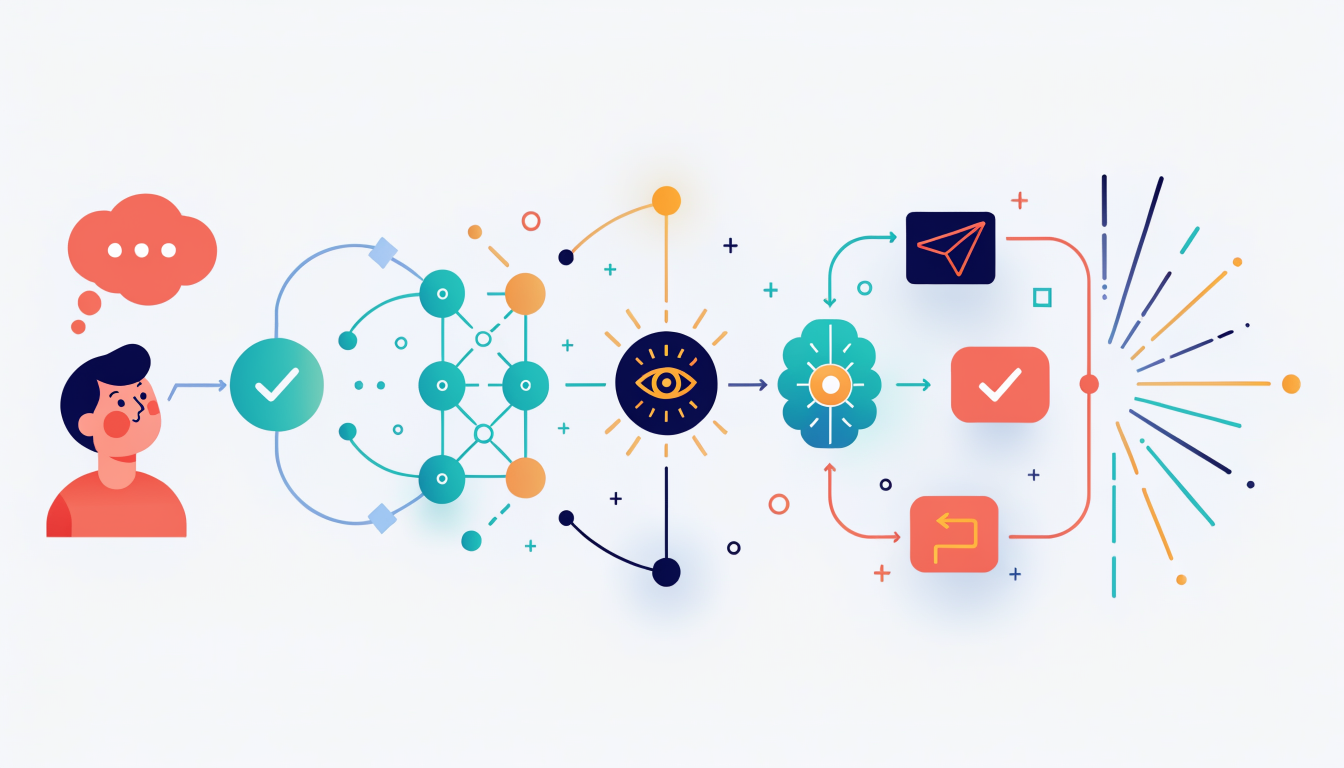
This is where AI automation fundamentally changes the game. Modern AI agents continuously monitor customer behavior and automatically trigger the right response at the right time: a personalized email to the cart abandoner, a retargeting campaign to the browsing prospect, a churn prevention offer to the at-risk customer. These aren't delayed reactions. They're immediate, contextual, and scaled across your entire customer base without manual intervention.
The efficiency gains alone justify the shift. Teams can save 10-15 hours weekly by eliminating routine tasks like data entry, manual follow-ups, and campaign setup. But the real revenue impact comes from preventing leakage. Every abandoned cart that goes unaddressed, every churn signal ignored, every upsell moment missed represents hidden revenue walking out the door.
What separates leaders from laggards is transparency in how these decisions happen. The best automation systems maintain detailed decision logs, showing exactly why an action was triggered and what data informed it. This builds trust with your team and customers while creating a feedback loop for continuous improvement. You're not just automating tasks; you're building institutional knowledge that compounds over time. That's the moat.
Best Practices for Companies Analytics in 2026
Here's your practical checklist for companies analytics in 2026. Start by auditing your current data strategy: are you collecting first-party data directly from customers, or relying on third-party signals that are becoming unreliable? Privacy-first approaches aren't optional anymore; they're competitive requirements.
Next, move beyond dashboards. Your analytics should answer "why did this happen and what do we do about it" rather than just "what happened." Implement AI-powered customer journey analysis that identifies which sequences of touchpoints actually drive conversions, not which single channel gets credit. The distinction matters more than you think.
Then establish your success metrics. Vanity metrics like page views and sessions won't tell you if revenue is growing. Focus instead on CSAT, NPS, CES, churn, and lifetime value to measure real business impact.
Close the insight-to-action gap by automating workflows. When your analytics platform triggers recommendations, your team should have clear next steps: which segment to target, what message to test, when to execute. Manual handoffs kill momentum.
Finally, build a testing culture. Assign ownership across marketing, product, and sales so insights become experiments within days, not weeks. The companies winning in 2026 aren't those with the best analytics tools; they're those who act fastest on what they learn.
Start with one high-impact metric this quarter. Measure it weekly. Iterate relentlessly.
Frequently Asked Questions About Companies Analytics
Can privacy-first analytics still track conversions effectively?
Yes. Privacy-first analytics tools can track conversions using privacy-conscious setup with less invasive tracking. The key is switching from third-party cookies to first-party data collection, transparent consent practices, and server-side tracking. You lose some granularity but gain customer trust and regulatory compliance. Most teams find this trade-off worth it.
How long does it take to see ROI from AI customer journey analytics?
Early wins appear in 4 to 8 weeks. You'll spot obvious drop-off points and quick fixes immediately. Meaningful revenue impact, though, typically takes 3 to 6 months as you optimize based on patterns AI uncovers. The timeline depends on your data quality and how fast your team acts on recommendations.
What's the difference between traditional analytics and AI-powered journey analytics?
Traditional tools show you what happened; AI shows you why and what comes next. AI identifies hidden patterns across touchpoints, predicts churn before it happens, and automatically surfaces revenue recovery opportunities. You move from reactive reporting to proactive optimization.
How do we measure the impact of analytics on actual revenue?
Track cohorts before and after implementing specific insights. Compare conversion rates, customer lifetime value, and churn for segments you've optimized versus control groups. Attribution modeling helps connect analytics improvements to revenue directly. Set a baseline first; improvement becomes obvious.
Is AI customer journey analytics complex to implement?
Not anymore. Modern platforms handle integration with your existing stack quickly. The real complexity is internal: defining what success looks like and ensuring your team actually uses the insights. Technology setup is the easy part.
Start Turning Customer Data Into Revenue Today
The companies dominating 2026 aren't those with the most data. They're the ones acting on it. While your competitors debate which insights matter, the leaders are already running AI-powered experiments, adjusting campaigns in real time, and converting that hesitation into revenue. The gap between insight and action is no longer a process problem; it's a competitive crisis.
You have customer data sitting in your systems right now. The question isn't whether you can collect it anymore. It's whether you can act on it fast enough. The competitive advantage in 2026 is organizations that can act on insights in hours, not weeks. Privacy-first analytics combined with AI automation isn't a nice-to-have feature. It's survival.
Your next move matters. Start by auditing your current analytics setup. Are you waiting days for reports? Are privacy concerns slowing your customer insights? Are manual processes eating up your team's time? These friction points are leaving money on the table.
The window to build this capability is open now. The companies that embed privacy-first, AI-driven analytics into their operations this year will have a structural advantage their competitors won't catch up to. Your customers are generating signals every moment. Stop letting them go unread.
Go deeper in the Learning Hub
Try Arktis free for 7 days
Attribution tracking, session recordings, and AI automation in one platform. Set up in 2 minutes, free for 7 days.
Start 7-day free trial