
Define Analyse: A Complete Guide to Data Analysis for Business
Last Updated: March 21, 2026 Key Takeaways Analyse means to examine something in detail to understand its nature and discover meaning from it In business, data...

Last Updated: March 21, 2026
Key Takeaways
- Analyse means to examine something in detail to understand its nature and discover meaning from it
- In business, data analysis transforms raw information into actionable insights that drive decisions
- Four main types: descriptive (what happened), diagnostic (why), predictive (what will happen), prescriptive (what to do)
- The BI industry is growing rapidly as companies prioritize data-driven decision making and automation
- Modern platforms automate analysis to uncover hidden patterns in customer data and revenue opportunities
What Does Analyse Mean? The Basic Definition
At its core, to analyse means to examine something in detail to discover its meaning, structure, and essential features. The word comes from Greek roots meaning "to loosen" or "to break apart," which perfectly captures what analysis actually does: it separates complex wholes into smaller, understandable components so you can see how they fit together and what they reveal.
In British English, the spelling is "analyse" (verb) with "analysis" as the noun. American English uses "analyze" and "analysis," but the meaning remains identical across both versions. This distinction matters less than understanding that analysis is fundamentally about breaking things down to understand them better.
The concept isn't new. Scientists have analysed natural phenomena for centuries. Psychologists analyse human behaviour. Economists analyse markets. But in recent decades, the term has taken on particular significance in business contexts, where it's evolved from a purely academic exercise into a strategic imperative.

Today, when business leaders talk about analysing data, they're doing something quite specific: extracting actionable insights from information to inform decisions. This goes beyond the dictionary definition. You're not just examining details; you're translating raw information into strategic advantage. Whether you're reviewing sales figures, customer behaviour patterns, or market trends, analysis has become the bridge between data and decision-making. Understanding what analyse truly means in this context sets the foundation for recognising why it matters so much to modern business success.
From Definition to Business Practice: What Data Analysis Really Does
At its core, "analyse" in a business context means converting raw data into actionable insights. You're not just looking at numbers; you're asking what those numbers mean for your organization. The process involves collecting data from various sources, cleaning out errors and inconsistencies, transforming it into usable formats, and then interpreting the results to find patterns and connections humans might otherwise miss.
Here's where business value emerges. Companies generate enormous volumes of data daily, from customer transactions to website behavior to inventory levels. Without analysis, this information sits dormant. With it, you gain clarity on what's actually happening in your business rather than operating on assumptions or gut feelings.
Consider a practical example: a retail company notices sales declining in one region. Raw data alone doesn't explain why. Analysis reveals that customers in that area are increasingly browsing online but purchasing from competitors. This insight then drives specific decisions, like adjusting your digital marketing strategy or improving local inventory visibility.
Data analysis solves several critical business problems simultaneously. It helps you understand customer behavior patterns, identify which products or services generate the most profit, spot operational inefficiencies, and predict future market trends. Rather than making decisions in the dark, you're working with evidence. This fundamentally changes how organizations compete and grow.
The ability to transform data into insights has become non-negotiable in modern business. Companies that analyze effectively respond faster to market changes, allocate resources more efficiently, and make decisions that actually stick because they're based on facts. That's the real power of analysis: it bridges the gap between information and action, turning curiosity about your business into competitive advantage.
The Four Types of Analysis Every Business Should Know
When you start analyzing data, you're actually moving through layers of understanding. Think of it like investigating a mystery: first you document what happened, then you figure out why, then you predict what comes next, and finally you decide what to do about it. These four types of analysis build on each other, each one revealing deeper insights than the last.
Descriptive analysis answers the most fundamental question: what happened? This is your starting point. If you're running an e-commerce business, descriptive analysis shows you that sales dropped 15% last month, that your top product is blue widgets, or that Tuesday mornings see the highest traffic. You're summarizing historical data and identifying patterns. Most companies excel here because it's straightforward, but it's only the beginning.
Diagnostic analysis pushes deeper by asking why. Why did sales drop? Was it seasonal? Did a competitor launch something new? Did you change your pricing? Using the same e-commerce example, diagnostic analysis might reveal that the sales decline coincided with a shipping delay that frustrated customers. You're now exploring causes and correlations, moving beyond surface-level observations.
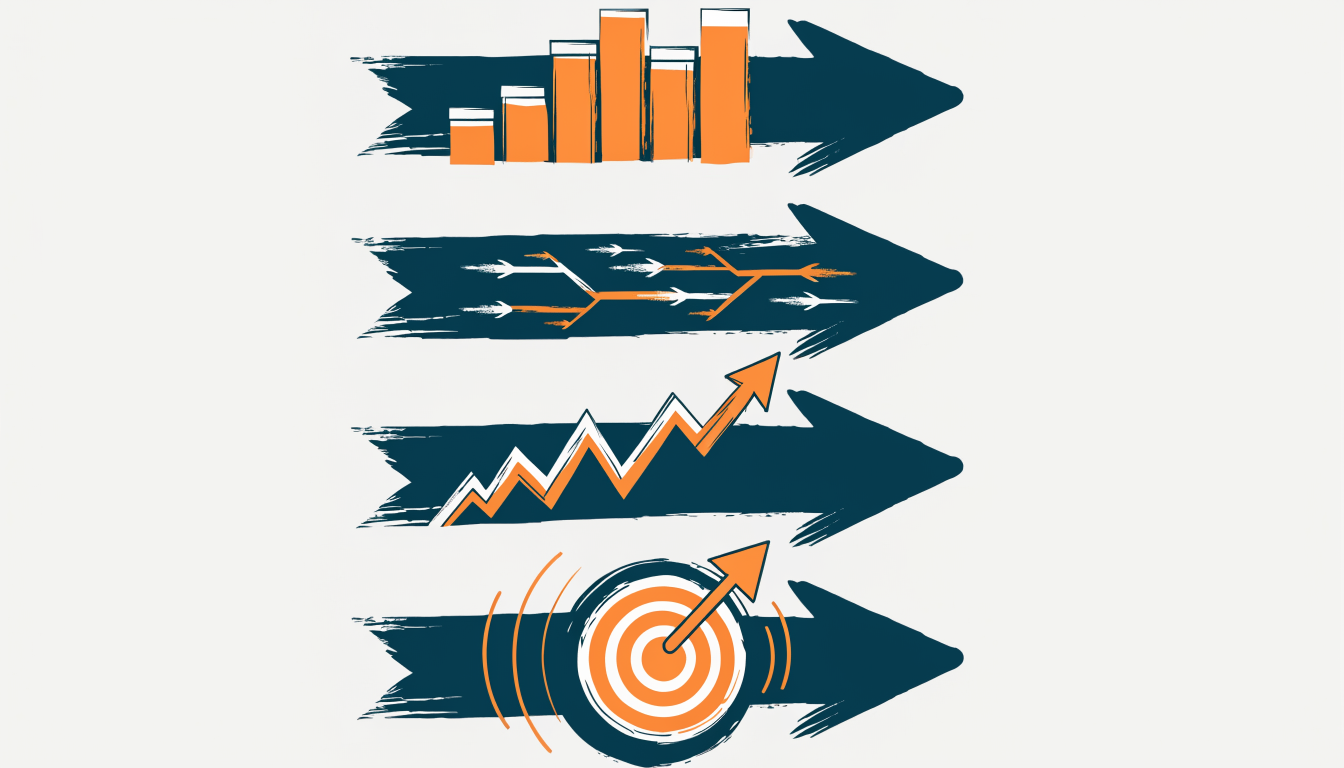
Predictive analysis shifts your focus forward: what will happen? Using historical patterns and statistical models, you forecast future outcomes. Will that shipping issue continue affecting sales next quarter? Will seasonal trends repeat? This type helps you prepare and allocate resources strategically.
Prescriptive analysis completes the journey by answering what you should do. Based on all previous insights, it recommends specific actions. Should you invest in faster logistics? Adjust pricing seasonally? Launch a marketing campaign? This is where analysis transforms into strategy, turning data into business decisions that actually move the needle.
The beauty of understanding these four types is recognizing that you need all of them. Companies relying only on descriptive analysis are essentially flying blind, reacting to yesterday's problems. Those incorporating all four types gain genuine competitive advantage because they're not just seeing what happened, they're actively shaping what comes next.
Why Businesses Need to Analyse Data: Real Impact on Growth
In today's competitive landscape, businesses that rely on intuition alone are losing ground to those armed with data. The difference isn't subtle. Companies making decisions based on solid analysis consistently outperform their competitors, achieve higher profitability, and respond faster to market changes. This isn't luck; it's the natural result of understanding what's actually happening in your business rather than guessing.
Consider what analysis reveals: inefficiencies draining your budget, customer segments you're underserving, pricing strategies that could boost margins, and operational bottlenecks costing you thousands monthly. Without this visibility, you're essentially flying blind. With it, you can redirect resources toward what works and eliminate what doesn't. That translates directly to cost savings and revenue growth.
The job market reflects this shift in priorities. Data analysts and scientists rank among the fastest-growing professions, according to the World Economic Forum, signaling how critical organizations view this capability. Demand for skilled analysts continues accelerating because businesses recognize the stakes. Data-driven decision making has become essential, not optional.
Beyond revenue, analysis protects you. It identifies risks before they escalate into crises, reveals fraudulent patterns, and flags supply chain vulnerabilities. It shows you what your competitors are doing and where market trends are heading, giving you time to adapt. In volatile industries, this foresight is survival.
Customer behavior analysis deserves special mention. Your data contains patterns about what drives purchases, what frustrates users, and which segments are most valuable. Understanding these patterns allows you to refine marketing, improve products, and build loyalty. You stop guessing what customers want and start knowing.
The real question isn't whether your business can afford to analyze data. It's whether you can afford not to. Every decision made without proper analysis is a missed opportunity, a potential cost you didn't catch, or a competitive advantage you handed to someone else.
The Data Analysis Process: How to Analyse Information Step by Step
Analysing data isn't mysterious or overly technical when you break it into manageable steps. Whether you're a small business owner or part of a larger organization, following this structured approach will help you extract real value from your information.
Start with clarity. Before touching any data, define exactly what you need to know. Are you investigating why customer retention dropped? Testing whether a marketing campaign worked? Your business question shapes everything that follows, so spend time getting this right. Write it down. Share it with your team. This becomes your north star.
Gather what matters. Collect data from sources you trust: your CRM system, website analytics, sales records, customer feedback platforms. The quality of your conclusions depends entirely on the quality of your sources, so verify reliability upfront. Don't just grab everything available; focus on data directly connected to your business question.
Clean before you analyse. Raw data is messy. You'll find duplicates, missing values, formatting inconsistencies, and errors. Spend time removing these problems; it's unglamorous work but absolutely essential. Analysing dirty data produces misleading results that waste everyone's time.

Apply your analytical tools. Calculate averages and percentages. Create charts and graphs. Build models if your question requires prediction. The specific technique depends on your data and objective, but the goal remains constant: transform raw information into patterns and insights.
Interpret with context. Numbers alone tell incomplete stories. A 15% sales increase sounds positive, but is it seasonal? Did competitors grow faster? Understanding what your findings actually mean requires thinking beyond the statistics themselves.
Communicate clearly. Present your insights visually and simply. Your finance director and marketing manager may need different presentations of the same findings. The best analysis fails if stakeholders can't understand or trust the results, so invest in clear communication.
Modern Data Analysis: Automation and AI Are Changing the Game
The way businesses analyse data has fundamentally shifted. What once required teams of statisticians spending weeks on routine tasks now happens in minutes, thanks to automation and artificial intelligence. This isn't about replacing analysts; it's about liberating them from tedious work so they can focus on what actually moves the needle.
AutoML (Automated Machine Learning) has become the standard copilot for data professionals, automating the time-consuming process of selecting algorithms and tuning hyperparameters. Rather than manually testing dozens of approaches, analysts can feed their data into these systems and let the platform surface the most promising models. The result: faster insights, fewer errors, and more time spent interpreting results rather than building them.
But automation is just the beginning. The real competitive advantage lies in Decision Intelligence: the ability to digitize and automate decision-making using data and AI combined. Instead of producing reports that sit in inboxes, modern analysis workflows trigger actions automatically. A customer churn risk is identified? The system flags it for intervention. Sales patterns shift? Inventory adjusts in real time.
Real-time analysis has become the baseline expectation. Markets move fast, and businesses that wait days for quarterly reports lose opportunities. Today's platforms integrate data collection, cleaning, analysis, and action in unified workflows, compressing decision cycles from weeks to hours.
Privacy-first analytics represent another crucial evolution. Businesses can now understand customer behavior and extract meaningful insights while respecting data protection regulations. This isn't a trade-off between insight and ethics; it's the new standard.
The tools have evolved so dramatically that analysis is no longer a specialist function. Accessible platforms mean that managers, marketers, and operators can ask their own questions and get answers without waiting for the analytics team. That democratization of analysis is reshaping how organizations work.
FAQ: Common Questions About Analysis and Data Analytics
What's the difference between 'analyse' and 'analytics'?
Think of analyse as the action and analytics as the system. When you analyse, you're actively examining data to answer specific questions. Analytics refers to the tools, processes, and discipline that make analysis possible. Data analysis is the practice of working with data to glean useful information for informed decisions. You need both working together.
Do I need to be a data scientist to understand analysis?
Absolutely not. You don't need a PhD in statistics to benefit from analysis. Business leaders, marketers, and managers use analytical thinking daily without formal training. Start with basic concepts, learn one tool, and grow from there.
What tools do I need to get started?
You probably already have them. Excel is genuinely powerful for foundational work. As you progress, explore Google Analytics for websites, Tableau for visualization, or Python for deeper projects. Start simple; complexity comes later.
How long until I see ROI from data analysis?
Small wins appear within weeks. Better customer segmentation, improved email campaigns, or cost reductions can happen quickly. Significant strategic changes typically take three to six months as insights compound.
Can analysis help with customer retention and revenue growth?
Yes, directly. By analyzing customer behavior patterns, you identify who's likely to leave and why. You spot your highest-value customers and understand what keeps them engaged. That's actionable insight that drives retention and revenue.
What's the difference between data analysis and business analysis?
Data analysis focuses on "what happened" using numbers. Business analysis asks "why it matters" and "what we should do about it." Both are essential; neither works alone.
How Arktis Transforms Analysis Into Action: Unlocking Revenue Growth
Now that you understand what analysis truly means, the challenge becomes execution. Knowing your customers abandon carts at checkout, for instance, is valuable; acting on that insight within hours is transformative.
This is where the gap between insight and action closes. Modern businesses can't afford the traditional cycle of analysts preparing reports, stakeholders reviewing findings, and teams implementing changes weeks later. Market opportunities don't wait. Customer behavior shifts in real time. Your response must match that pace.
The most effective analysis platforms handle three critical functions simultaneously: they process customer data across every conversion touchpoint while maintaining strict privacy standards, they surface patterns that would take human analysts months to identify, and they enable immediate action through automated workflows. This combination matters because insights without speed lose their value.
For ecommerce and SaaS businesses, this acceleration directly impacts revenue. When you understand exactly where customers drop off, which messaging resonates, and which features drive retention, you recover revenue that competitors lose to inaction. The businesses capturing an additional 10% revenue growth aren't necessarily smarter; they're faster at turning analysis into decisions.
The question isn't whether your business should analyze customer data. It's whether you're prepared to act on what you learn before the moment passes. That's where modern analysis platforms earn their place in your stack: they compress the entire journey from data collection to actionable recommendation into minutes, not weeks.
Go deeper in the Learning Hub
Try Arktis free for 7 days
Attribution tracking, session recordings, and AI automation in one platform. Set up in 2 minutes, free for 7 days.
Start 7-day free trial