
GDPR Compliant Analytics: Complete Guide to Privacy-First Tracking

Last Updated: March 30, 2026
Key Takeaways
- GDPR-compliant analytics means collecting only anonymous data, avoiding cookies, and respecting user privacy from design
- Google Analytics faces legal challenges in EU countries; multiple DPAs ruled it non-compliant with GDPR
- Non-compliance risks fines up to 4% of global revenue; compliance requires explicit consent, data minimization, and secure handling
- Privacy-first alternatives exist but many sacrifice conversion tracking depth; the best solutions balance privacy with actionable insights
What Is GDPR-Compliant Analytics and Why It Matters
GDPR-compliant analytics is website tracking that collects only anonymous data, respects user consent, and avoids identifying or profiling visitors. It's data collection stripped of its personally identifiable elements: no cookies tracking behavior across sites, no user profiles built without permission, no surveillance mechanics hiding in your analytics dashboard. Instead, you get aggregated insights that answer your business questions while keeping individual users genuinely private.
For most companies, this shift feels urgent because the stakes are real. Organizations can be fined up to 4% of yearly revenue for GDPR non-compliance, which translates to millions for mid-market businesses. Beyond the financial hit, regulators are actively investigating analytics implementations across the EU. Data protection authorities aren't waiting for complaints; they're conducting audits. Your competitors are already adapting, which means staying non-compliant isn't just a legal risk,it's a competitive disadvantage.

The real challenge isn't compliance itself; it's achieving it without gutting your conversion intelligence. Most companies assume privacy-first tracking means accepting blind spots in customer behavior. That's the false choice you need to reject. The right GDPR-compliant setup gives you the insights you actually need to grow, just without the invasive tracking that erodes customer trust. Any business processing data from EU residents needs to care about this, whether you're based in Europe or not. Your website visitors' location matters more than your company's address.
The Google Analytics Problem: Why the World's Most Popular Analytics Tool Fails GDPR
Google Analytics has become a compliance liability across Europe, not because of speculation or interpretation, but because of explicit rulings from multiple data protection authorities. Since 2021, regulators in Austria, France, Italy, Netherlands, Denmark, Norway, and Sweden have concluded that using Google Analytics violates GDPR. These aren't advisory opinions; they're binding decisions with real consequences.
The core issue is straightforward: Google Analytics transfers user data to servers in the United States, where it's subject to US surveillance laws. Under GDPR, this data transfer requires an "adequate level of protection" equivalent to European standards. The 2020 Schrems II ruling invalidated the Privacy Shield framework that previously enabled these transfers. Since then, regulators have found no valid legal mechanism to justify sending European user data to US infrastructure, regardless of contractual safeguards.
Google's GA4 improvements don't resolve this fundamental problem. IP anonymization, consent mode, and other technical enhancements sound progressive on paper. However, anonymizing IP addresses does not eliminate the core legal issue of data transfer, and the data still flows to US servers subject to surveillance authority access. You're treating symptoms while the diagnosis remains unchanged.
The real-world consequences extend beyond theoretical risk. Organizations using Google Analytics face administrative fines up to 4% of global annual revenue, individual lawsuits from privacy advocates, and orders to immediately cease data transfers. Several companies have already received significant penalties, and regulators continue investigating new cases. Some jurisdictions have moved beyond fines to operational restrictions, effectively banning Google Analytics use outright.
This isn't about Google being negligent or malicious. It's about the legal reality that American data residency and European privacy law exist in direct conflict. Until US surveillance frameworks change or data can legally remain in Europe, Google Analytics creates documented compliance exposure. Organizations operating in Europe need analytics solutions that process data within European borders, under European legal jurisdiction, with no US data transfers. This has shifted from a preference to a requirement.
Core GDPR Requirements for Analytics: The Five Pillars of Compliance
GDPR compliance for analytics isn't a single checkbox. It's a framework built on five interconnected requirements that fundamentally change how you collect, store, and use visitor data. Understanding these pillars transforms "compliance" from a legal burden into a practical design principle for better analytics.
Consent must be unambiguous. Think of consent like a signed contract rather than a handshake. Users need to actively opt in to data collection, not passively accept it. That cookie banner on your website isn't bureaucratic theater; it's the mechanism that proves you asked permission before tracking. You must acquire unambiguous consent, need user consent if collecting personally identifiable information. A pre-checked box doesn't count. A buried consent link doesn't count. Only a clear, deliberate user action counts.
Data minimization means collecting only what serves your actual purpose. If you need to know that visitors read your pricing page, you don't also need their operating system, screen resolution, and browser plugins. Collect less data, store less data, analyze less data. This isn't restrictive; it's efficient. Smaller datasets are faster to process, cheaper to store, and lower-risk if breached.
Security requires encryption, access controls, and accountability. Your analytics platform should encrypt data in transit and at rest. Only authorized team members should access raw user information. Staff handling sensitive data need training. These aren't optional enhancements; they're baseline requirements. A data breach doesn't just harm users; it exposes your business to substantial fines.
Rights to access and erasure mean users own their data. When someone requests a copy of their data, you must provide it. When they ask to be forgotten, you must delete their records. This isn't paperwork; it's infrastructure. Your analytics system needs to support these requests at scale, not as manual exceptions.
Transparency and fair processing demand honest communication. Your privacy policy must clearly explain what data you collect, why you collect it, and how long you keep it. No hidden tracking. No selling data to third parties without explicit permission. Users deserve to understand exactly how their behavior informs your business decisions.

These five pillars aren't in conflict with conversion tracking. They're the foundation that makes ethical conversion tracking possible. When you build analytics on this framework, you gain user trust alongside user insights.
The Customer Journey Tracking Paradox: Privacy vs. Insight
Here's the uncomfortable reality: building a complete picture of how customers move through your business has become genuinely harder under GDPR and similar privacy regulations. You're not imagining this friction. The tension is real, and it's costing you money.
The core problem is fragmentation. When someone browses your website on their phone, then later completes a purchase on their laptop, privacy-compliant analytics often records these as two separate visitors. Without persistent tracking across devices, analytics tools record actions as separate visitors, leading to inaccurate attribution and fragmented insights. You lose visibility into the actual path that led to conversion. This isn't a minor reporting inconvenience; it cascades through your entire optimization strategy.
Consent-based tracking makes this worse. When visitors decline non-essential cookies, you're effectively blind to their behavior across multiple touchpoints. You might know they clicked an ad, but if they don't consent to tracking, you can't follow them through product pages, cart abandonment, or the final purchase. The journey simply vanishes from your data.
The business impact is tangible. Incomplete customer journey data leads to poor attribution decisions. You might credit the wrong channel, over-invest in underperforming campaigns, or fail to optimize the moments that actually drive conversions. Your team struggles to answer basic questions: Which combination of touchpoints converts best? Where do users drop off? What's the real ROI of each marketing dollar?
Yet here's what matters: this isn't an argument for abandoning privacy compliance. Regulations exist because they protect your customers, and trust is worth more than fragmented data. The real opportunity lies in finding analytics approaches that respect privacy while still delivering the insights you need to run your business effectively. The solution isn't to choose between compliance and conversion intelligence; it's to demand analytics tools built for both from the start.
Privacy-First Analytics Tools: How They Work and What You Gain
Privacy-first analytics tools take fundamentally different approaches to compliance, each with distinct advantages and trade-offs. Understanding these methods helps you choose the right fit for your organization's needs and risk tolerance.
The EU hosting approach keeps all data within European Union borders, satisfying GDPR's data residency requirements. EU hosting means data is stored on servers within the European Union, which satisfies GDPR data residency requirements This method works well for organizations already operating primarily in Europe or those handling sensitive customer information. The trade-off is geographic limitation; if your servers are EU-only, you may experience slightly higher latency for users accessing from other regions. However, this approach maintains full analytics depth while ensuring compliance through infrastructure rather than data limitation.
Cookieless tracking eliminates consent requirements entirely by avoiding cookies altogether. Tools like Plausible, Fathom, and TelemetryDeck collect no personally identifiable information, so they don't require consent banners These platforms track aggregate behavior without storing individual user profiles. You lose granular session replay and detailed user journey mapping, but you gain operational simplicity. No consent banner means faster page loads and a cleaner user experience. This approach works best for content-focused websites where understanding broad traffic patterns matters more than individual behavior.
Anonymization and pseudonymization represent technical safeguards rather than architectural choices. These methods strip or encrypt personally identifiable information at the point of collection, allowing detailed analysis without exposing individual identities. The challenge lies in implementation; true anonymization is difficult to achieve while maintaining analytical usefulness.
Data minimization takes the opposite approach from traditional analytics. Instead of collecting everything possible, you collect only essential metrics: page views, traffic sources, basic device information. Matomo offers flexibility to host analytics data on-premise or in secure cloud environment, eliminating reliance on third-party servers and ensuring GDPR compliance This reduces risk exposure and simplifies compliance audits. You won't understand why users leave your checkout flow or which content sections drive engagement most deeply.
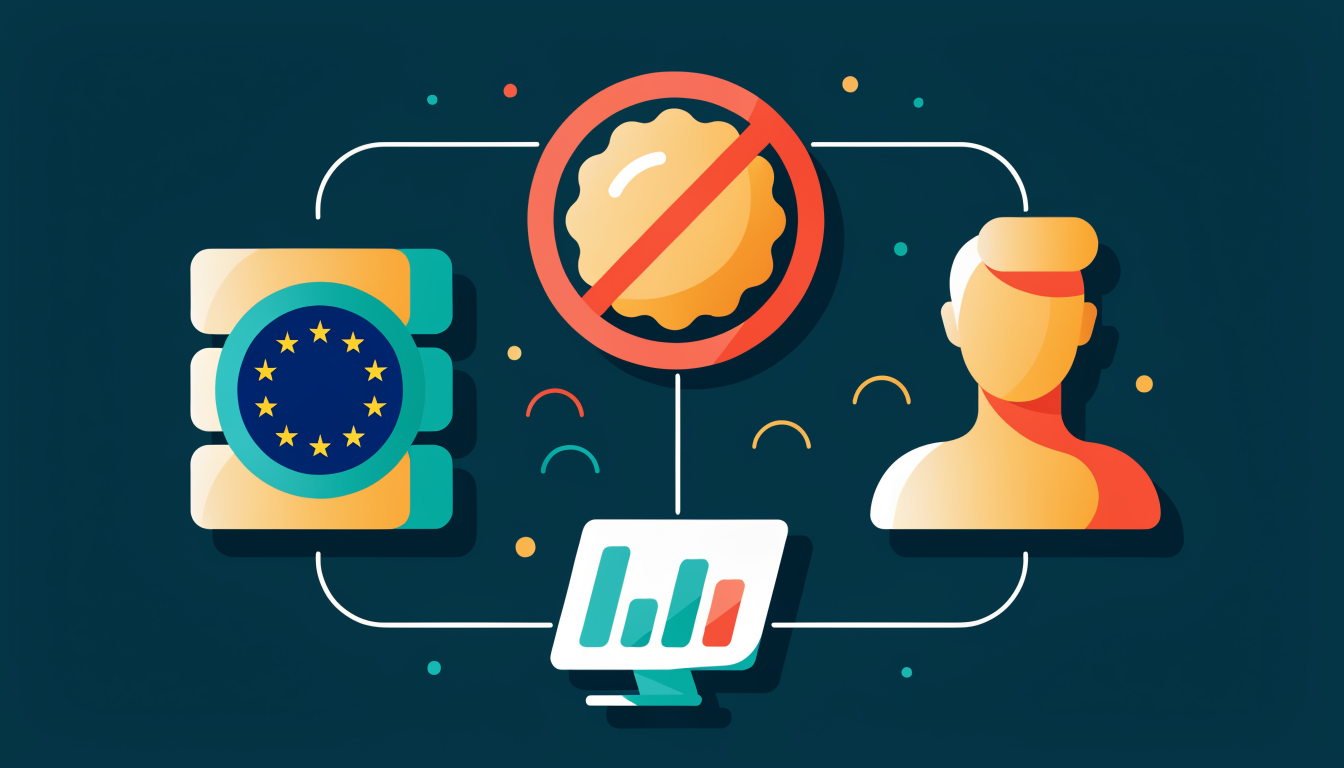
Most organizations don't choose one pure approach but combine elements. You might use EU hosting with data minimization for standard traffic tracking, then employ pseudonymization for conversion funnel analysis. The goal is matching your compliance method to your actual business needs rather than adopting maximum restrictions that cripple decision-making.
Building Your GDPR-Compliant Analytics Stack: Step-by-Step Implementation
Implementing GDPR-compliant analytics requires a structured approach. Begin by conducting a thorough audit of your current setup. Document every data collection point: your website analytics, email tracking, advertising pixels, CRM integrations, and third-party tools. Identify what data you're collecting, where it's stored, and whether you have a legal basis for each data point. This audit reveals your compliance gaps and prevents costly oversights later.
Next, choose your compliance method. You have three primary paths: hosting your analytics infrastructure within the EU to benefit from stronger legal protections; adopting cookieless tracking solutions that minimize personal data collection; or implementing a hybrid approach combining both strategies. Your choice depends on your technical resources, budget, and data needs. Many companies find that cookieless alternatives like Matomo, which has received approval from the French Data Protection Authority, provide adequate insights without the compliance burden of cookie-based tracking.
Consent management is non-negotiable. Deploy a consent management platform (CMP) that captures genuine user choice before data collection begins. Ensure your banner clearly explains what data you collect and why. Users must be able to refuse non-essential tracking without losing access to your core services. Your CMP should also maintain audit logs proving when and how consent was obtained.
Configure your analytics tool with privacy-first settings built in. Enable IP anonymization to prevent personal identification, set appropriate data retention periods (often 13-26 months), and disable unnecessary data collection features. Review your tool's documentation to understand which features require consent.
Documentation is your compliance proof. Maintain records of your data processing activities, your legal basis for collection, consent records, and any data processing agreements with vendors. This documentation protects you if regulators investigate.
Finally, treat compliance as ongoing work, not a one-time checkbox. Regulations evolve, your tools change, and user expectations shift. Schedule quarterly reviews of your analytics stack. Check for new features that improve privacy, audit your consent rates, and verify that your data handling still aligns with GDPR requirements. Compliance compounds over time when you stay proactive rather than reactive.
The Legal Basis Question: Consent, Legitimate Interest, and Legal Uncertainty
Most organizations assume consent is the safest legal basis for analytics, but GDPR creates a paradox: while consent is required for many tracking activities, it's remarkably difficult to obtain validly under GDPR's strict standards. Consent must be freely given, specific, informed, and unambiguous. A pre-checked box doesn't qualify. A vague privacy policy doesn't qualify. Users must understand exactly what data you're collecting and why, then actively agree. In practice, this means most cookie consent banners fail to meet the standard.
This gap has pushed companies toward "legitimate interest" as an alternative legal basis. The concept sounds straightforward: you can process personal data if you have a legitimate business reason that outweighs the individual's privacy expectations. But legitimate interest requires a documented balancing test. You must prove the interest is genuine, necessary, and that privacy risks don't override business benefits. Regulators have signaled skepticism about legitimate interest for behavioral analytics specifically, yet no universal consensus exists on where the line actually sits.
This uncertainty is the real problem. Broad consent no longer provides sufficient legal basis for data analytics under GDPR; relying on consent for analytics involving EU personal data creates non-compliance risks. You cannot simply copy another company's approach. Your analytics setup, audience, and business model are unique. This means you must make your own documented legal judgment about which basis applies to your specific tracking. That responsibility rests with you, not your vendor or your legal team's past decisions.
The Hidden Cost of Non-Compliance: Fines, Lawsuits, and Operational Risk
The financial stakes of non-compliance are substantial. Organizations face penalties up to 20 million euros or 4% of global annual revenue, whichever is higher, creating a serious business liability that extends far beyond legal departments. These aren't theoretical risks; regulators actively enforce these rules, and the fines keep growing as data protection authorities gain experience with GDPR enforcement.
Beyond financial penalties, lawsuits represent a second vector of cost. Privacy advocacy groups actively pursue legal action against websites deploying non-compliant analytics tools, turning compliance failures into courtroom battles. Each lawsuit consumes resources, damages reputation, and creates operational uncertainty.
The operational impact cuts deeper still. Non-compliance can trigger data processing restrictions, service bans in European markets, and loss of customer trust. A single compliance failure doesn't just generate a fine; it can disrupt your entire analytics infrastructure, force emergency tool migrations, and damage relationships with users who expect their data to be handled responsibly.
Here's what matters most: the cost of compliance is almost always lower than the cost of non-compliance. Implementing privacy-first analytics, obtaining proper consent, and documenting data processing flows requires investment upfront. But this investment protects you from penalties that dwarf compliance expenses, eliminates legal exposure, and preserves operational continuity.
Think of compliance not as a compliance cost, but as risk management. The question isn't whether you can afford to implement GDPR-compliant analytics. It's whether you can afford not to.
The Future of Analytics: Building Privacy-First Systems That Still Drive Revenue
The companies winning today aren't choosing between privacy and insights. They're building systems where compliance becomes a competitive advantage.
Privacy-by-design means embedding regulatory requirements into your analytics infrastructure from day one, not bolting them on later. This approach eliminates costly retrofits and reduces the surface area for violations. When you trace every data flow and document your legal basis upfront, you stop treating GDPR as a compliance checkbox and start treating it as operational architecture.
First-party data strategies flip the script entirely. Instead of tracking users across the web, collect data directly through transparent value exchanges: newsletter signups, preference centers, account creation, and engagement tools. Users willingly share information when they understand what they're getting in return. This data is cleaner, more reliable, and legally defensible.
Advanced analytics tools now deliver meaningful conversion intelligence without personal tracking. Aggregated data, statistical modeling, and AI-powered attribution show you what's working without exposing individual behavior. Modern measurement strategies use consent-conditional tag firing and aligned data retention to respect user choices while maintaining measurement integrity.
The real advantage? Trust. Companies that genuinely protect customer privacy don't just avoid penalties; they build loyalty. Customers increasingly expect privacy-first businesses. Those that deliver it win market share, reduce churn, and attract talent that wants to work for ethical organizations. Privacy compliance isn't the end of analytics. It's the beginning of better ones.
Frequently Asked Questions About GDPR-Compliant Analytics
Do I need a cookie banner if I use GDPR-compliant analytics?
Not necessarily. Tools like Plausible, Fathom, and TelemetryDeck collect no personally identifiable information, so they don't require consent banners. However, you should still disclose analytics usage in your privacy policy. If you're using Google Analytics 4 or similar tools that require consent, a banner becomes mandatory.
Can I still track conversions while staying GDPR-compliant?
Absolutely. You can track conversions, revenue, and customer behavior without capturing personal data. Focus on event tracking rather than user identification. Avoid connecting analytics to CRM systems or email lists without explicit consent, and you'll maintain both compliance and conversion intelligence.
How long can I keep analytics data under GDPR?
GDPR doesn't specify a retention period, but the principle of data minimization suggests keeping data only as long as necessary. Most compliance experts recommend 13 months for standard analytics. Some jurisdictions, like Austria, have stricter interpretations. Check your local regulations and document your retention policy clearly.
What's the difference between anonymization and pseudonymization?
Anonymization removes all identifying information permanently; you can't link data back to individuals. Pseudonymization replaces identifiers with codes but retains the ability to re-identify users. GDPR treats these differently: anonymized data falls outside GDPR scope entirely, while pseudonymized data still requires compliance measures.
Do I need a Data Processing Agreement with my analytics vendor?
Yes, if your vendor processes personal data on your behalf. Even with privacy-first tools, having a DPA in place protects you legally. It clarifies responsibilities, data handling practices, and security measures.
Is the EU-US Data Privacy Framework enough to make GA4 compliant?
No. The framework makes data transfers compliant, but website owners must ensure data collection itself meets GDPR requirements. You still need consent mechanisms, transparent disclosures, and proper configuration. The framework is one piece of a larger compliance puzzle.
Key Takeaways: Your GDPR Analytics Compliance Checklist
Your analytics setup needs a compliance overhaul if you haven't reviewed it recently. Here's what to tackle immediately:
Audit your current tools. Document which analytics platforms you use, what data they collect, and where it's stored. Google Analytics faces legal challenges across multiple EU jurisdictions; if you rely on it, you need a mitigation strategy now.
Choose your compliance path. Three options exist: migrate to EU-hosted analytics, implement cookieless tracking, or adopt strict data minimization practices. Each has tradeoffs between functionality and risk.
Secure proper consent. If you're collecting any personal data, your consent management platform must capture explicit, informed agreement before tracking begins. Implied consent no longer cuts it.
Document your legal basis. Write down why you're collecting analytics data and which GDPR lawful basis applies. This protects you during audits and investigations.
Update your policies. Your privacy policy and cookie banner must accurately describe your analytics practices. Vague language creates liability.
Verify vendor agreements. Your analytics provider needs a signed Data Processing Agreement confirming they handle data legally on your behalf.
Set retention limits. Configure your analytics tool to delete data after a defined period. Most businesses don't need data older than 14 months.
Audit regularly. Regulations evolve constantly. Quarterly compliance reviews catch drift before it becomes a problem.
Move Beyond Compliance: Privacy-First Analytics That Drive Growth
The compliance checkbox has been checked. Your cookies are documented, your consent flows are documented, your data retention policies are documented. But here's what separates market leaders from the rest: they've stopped treating GDPR as a constraint and started treating it as a foundation.
Compliance is table stakes. Every serious business needs it. What actually matters now is what you build on top of it. The companies winning customer trust and market share aren't those with the most invasive tracking; they're the ones who prove they respect privacy while still understanding their customers deeply.
This shift demands a specific kind of analytics infrastructure. You need tools built on first-party data collection and privacy-by-design principles from the ground up, not bolted on as an afterthought. These platforms capture the customer journey with precision, delivering conversion intelligence and behavioral insights without relying on third-party cookies or invasive tracking methods that create compliance nightmares.
The future belongs to organizations that solve this tension: strict privacy compliance paired with genuine business intelligence. When you move beyond compliance theater to authentic privacy-first analytics, something shifts. Your customers know you respect their data. Your team knows your insights are reliable. Your legal department can breathe.
The next step is concrete. Audit your current analytics stack. Ask whether your tools are truly privacy-first or just compliance-adjacent. Evaluate solutions that balance regulatory requirements with conversion tracking, customer segmentation, and revenue attribution. The tools that deliver both will become non-negotiable.
Go deeper in the Learning Hub
Try Arktis free for 7 days
Attribution tracking, session recordings, and AI automation in one platform. Set up in 2 minutes, free for 7 days.
Start 7-day free trial