
Best Revenue Recovery Software 2026: Complete Guide
Last Updated: March 1, 2026 Key Takeaways Over 20% of global transactions fail; AI-powered recovery software recovers up to 50-75% of lost revenue SaaS companie...

Last Updated: March 1, 2026
Key Takeaways
- Over 20% of global transactions fail; AI-powered recovery software recovers up to 50-75% of lost revenue
- SaaS companies lose 3-5% of ARR to leakage; failed payments cause 70% of involuntary churn
- Real-time AI decisioning adapts messaging, timing, and channels based on individual customer behavior
- Automation reduces manual revenue recovery work by 1000+ hours annually while increasing success rates
What is Revenue Recovery Software?
Every day, revenue disappears. Over 20% of global transactions fail, hitting your bottom line before you even realize it's gone. Failed payments, chargebacks, deductions, and abandoned transactions silently erode what should be profit. For many businesses, the damage runs deeper: up to 50% of customer churn originates from failed payments, not dissatisfaction.
Revenue recovery software systematically identifies and recaptures this lost money across multiple channels and transaction types. It's the infrastructure that catches what falls through the cracks: declined credit cards, payment processing errors, subscription lapses, supplier deductions, and disputed charges. Rather than manually investigating each failure, modern platforms automatically flag high-impact recovery opportunities and execute recovery strategies at scale.
This matters across virtually every business model. SaaS companies hemorrhage recurring revenue through failed card transactions. Ecommerce platforms lose checkout conversions to payment friction. Healthcare providers struggle with claim denials and patient payment failures. B2B vendors face supplier deductions and chargeback disputes. The common thread: revenue leaks that compound over time.

Today's solutions leverage AI to prioritize which recovery opportunities deliver the highest ROI, transforming reactive firefighting into strategic revenue optimization. It's no longer nice-to-have; it's essential infrastructure for protecting margin and growth.
The Revenue Leakage Problem: How Much Are You Actually Losing?
Revenue leakage isn't a small problem you can ignore. It's a systemic drain that compounds silently across your business, eroding profits month after month.
The numbers are staggering. SaaS companies lose around 3-5% of annual recurring revenue (ARR) to leakage, which means a $10 million ARR company is hemorrhaging $300,000 to $500,000 annually. For many founders, that's equivalent to losing an entire team's salary to invisible waste.
Failed transactions are the primary culprit. Failed transactions make up 70% of all passive churn in the SaaS industry, meaning most of your revenue loss isn't from customers actively leaving, it's from payment failures, expired cards, and processing errors that go unrecovered.
But leakage extends far beyond SaaS. Ecommerce businesses face brutal cart abandonment rates. The cart abandonment rate spiked to 70.19% in 2025, and most abandoned carts never get recovered through targeted outreach.
B2B suppliers face a different beast entirely. Suppliers lose 1-3% of annual revenue to deductions from retailers, often buried in chargebacks and reconciliation disputes that require manual investigation. For a $50 million supplier, that's $500,000 to $1.5 million in annual losses.
Healthcare organizations bleed money too. Approximately 15-20% of claims get denied on first submission, forcing administrators into endless resubmission cycles that drain resources and delay cash flow.
The painful part: most of this revenue is recoverable. It's not lost to competition or market shifts. It's lost to friction, errors, and operational blind spots. The question isn't whether you're losing money. It's whether you have the visibility and tools to recover it.
How Modern Revenue Recovery Software Works: AI vs. Traditional Automation
Traditional automation got us partway there. It set up rules: if payment fails, send email on day three; if no response, escalate on day seven. Predictable, consistent, and painfully rigid. When customer behavior changed or market conditions shifted, these systems kept following the same script.
Modern AI-driven recovery software operates on a completely different principle. Instead of following static rules, it learns from thousands of recovery attempts in real-time, identifying patterns humans would never spot. Machine learning algorithms analyze which customers respond best to email versus SMS, whether morning or evening outreach converts higher, and which messaging tone resonates with different segments. The system continuously adapts based on what actually works.
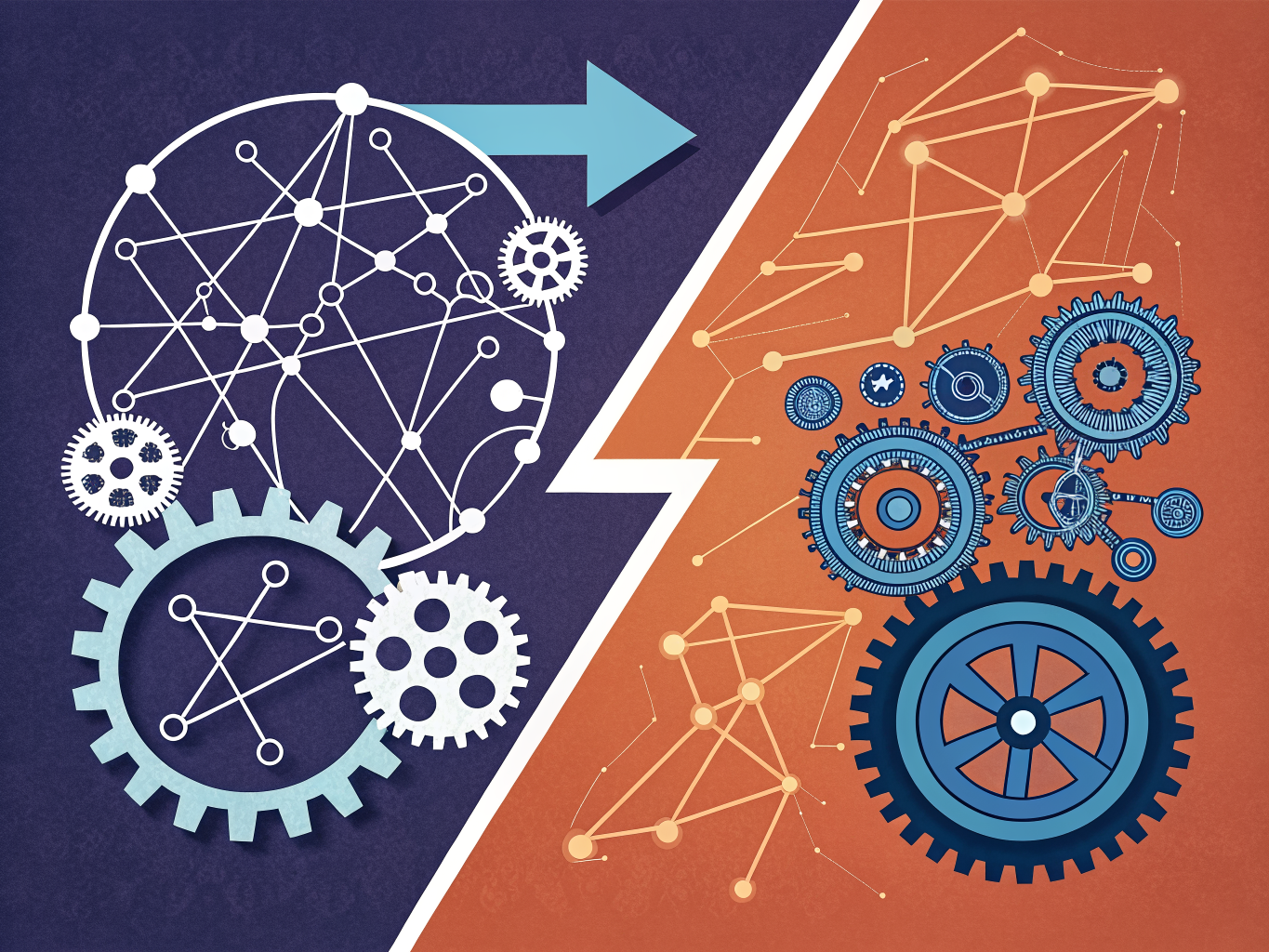
Natural language processing takes this further. Rather than sending generic dunning notices, AI detects customer sentiment from previous interactions and adjusts tone accordingly. A frustrated customer receives empathetic messaging; a forgetful one gets helpful reminders. This personalization isn't manual; it's algorithmic and scales across millions of accounts.
Predictive analytics work upstream too. Before sending any outreach, AI identifies which failed payments are actually recoverable, scoring accounts by likelihood to pay. This means your team focuses energy where it matters most.
The real differentiator is real-time decisioning. Traditional systems wait for scheduled send times or manual intervention. AI systems respond instantly to customer behavior. A customer clicks a payment link but doesn't complete it? The system immediately detects this and adjusts next touchpoint timing and messaging. One major client saw a 25% lift in recovery rates with AI-driven outreach, while AI-driven solutions recover up to 50% of terminally failed transactions.
This isn't incremental improvement. It's a fundamentally smarter approach to a persistently expensive problem.
Key Features to Look for in Revenue Recovery Software
When evaluating revenue recovery software, focus on these essential capabilities that separate effective platforms from basic tools.
Automation That Actually Works
Start with intelligent payment retry logic. The best systems don't just retry failed payments blindly; they use dynamic routing to select the optimal payment method based on customer location, currency, and payment type. This precision matters because timing and channel selection directly impact recovery rates. You'll want customizable retry schedules that respect customer preferences without annoying them into cancellation.
Communication at Scale
Look for multi-channel dunning campaigns across email, SMS, in-app notifications, and push messages. Templates should be fully customizable so you're not sending generic "payment failed" notices. A/B testing capabilities let you optimize messaging and timing, which can meaningfully improve response rates. The platform should track customer engagement across channels, showing you what actually resonates.
Visibility Into What's Working
Real-time dashboards are non-negotiable. You need instant visibility into recovery metrics: retry success rates, revenue recovered, customer churn impact, and campaign performance. This isn't just vanity; it's how you identify what's working and adjust quickly.
Smart Predictions
Advanced systems use predictive analytics to score accounts by recovery probability. Rather than treating all failed payments equally, AI-driven decisioning adapts contact timing and channel selection based on actual customer behavior. TSI's systems demonstrate real-time AI decisioning that continuously learns and improves.
Integration and Compliance
Ensure seamless connections with your payment processors, billing systems, and CRM platforms. Data silos kill recovery efforts. You'll also need robust audit trails and compliance management, particularly if you operate across multiple jurisdictions.
The Bottom Line
The difference between average and exceptional recovery software is the combination of intelligent automation plus actionable intelligence. Platforms that combine these elements can reclaim up to 75% of eligible revenue while reducing manual work substantially.
Best Revenue Recovery Software Solutions by Use Case
Revenue recovery software works differently depending on your business model, so finding the right fit means matching the tool to your specific revenue leak.
SaaS and Subscription Businesses
Failed payments are your biggest enemy here. Dunning software automates reconnecting with customers when payments fail, typically recovering 20-40% of otherwise lost recurring revenue. Card Updater technology automatically refreshes expired or invalid card details before your billing cycle, catching issues before they become cancellations. Intelligent retry logic spreads payment attempts across multiple days and times, significantly improving success rates without annoying customers.
Ecommerce and Marketplaces
Abandoned carts and chargebacks drain margins fast. Abandoned cart recovery platforms use behavioral triggers and personalized messaging to bring customers back, with typical recovery rates between 10-30% of lost transactions. Chargeback management software fights disputes before they become losses, while marketplace deduction recovery tools track and recover co-op fund deductions that retailers often miss entirely.
Healthcare Providers
Claim denials and underpayments represent massive revenue leaks. Denial management platforms flag rejections in real-time so your team can resubmit before appeal windows close. 100% automated claim processing accelerates financial recovery by eliminating manual tracking bottlenecks. Underpayment detection tools catch when insurers pay less than contractually agreed rates, recovering thousands monthly for mid-sized practices.
Supplier and Vendor Management
Deduction disputes often go unchallenged simply because tracking them is painful. Deduction management platforms centralize every retailer reduction, provide supporting documentation automatically, and manage the entire dispute workflow. Co-op claim automation ensures you capture every marketing fund your retailers owe you.
Sales and Customer Reactivation
AI-powered outreach systems identify at-risk customers before they churn and trigger automated follow-ups via email or SMS. These systems learn what messaging resonates, personalizing recovery attempts without requiring your team to manually chase every lead.
The key is choosing software that handles your specific revenue leaks, not a generic solution that tries to do everything.
Implementation and ROI: What to Expect
Worried about the implementation burden? Here's the reality: most revenue recovery software integrates directly with your existing payment processors and billing systems, meaning you're not rebuilding your tech stack from scratch.
Typical implementation takes 2 to 8 weeks depending on your operation's complexity. Your team will need to dedicate some attention during setup, but vendors have streamlined this process considerably. You're not looking at months of disruption.
The financial wins arrive faster than you might expect. Many organizations see quick wins in the first 30 to 90 days, particularly from abandoned cart recovery and failed transaction retries. These are immediate revenue captures that require minimal learning curve.
Full ROI potential typically materializes within 6 to 12 months as the AI learns your specific customer behavior patterns, payment failure reasons, and recovery windows. The longer the system operates, the smarter it becomes at predicting which customers will respond to recovery attempts and when.
Here's what reduces implementation anxiety: many providers operate on performance-based pricing models. You pay a percentage of the revenue you actually recover, not a flat fee upfront. This aligns incentives perfectly; the vendor only profits when you do. Some also offer free audits to show you exactly what revenue you're currently losing.
Beyond immediate recovery, don't overlook the prevention angle. Root cause analysis helps identify why failures happen in the first place. Are customers abandoning carts due to confusing checkout flows? Is a payment processor integration causing systematic failures? Understanding these patterns prevents repeat revenue losses going forward.
The burden isn't as heavy as implementing new systems typically feels. You're adding capability to existing infrastructure, not replacing it. Start with a pilot, measure results, then expand. That's the realistic path forward.
FAQ: Common Questions About Revenue Recovery Software
Q1: How much does revenue recovery software cost? Pricing varies widely depending on your transaction volume. Many providers use performance-based pricing models where you only pay a percentage of recovered revenue, typically ranging from 15-35%. Others charge monthly subscriptions starting around $500-$2,000. The best part? You're not paying upfront for failures, only for money actually recovered.
Q2: Is my customer data safe and compliant? Absolutely. Reputable providers maintain strict compliance with PCI DSS and GDPR standards, and maintaining audit trails is essential for compliance. Your data gets encrypted, monitored, and handled with the same security standards as your payment processor.
Q3: How long does integration take? Most integrations happen in days, not weeks. Whether you're using Stripe, Shopify, or a custom billing system, modern revenue recovery software connects via API with minimal disruption to your existing workflow.
Q4: Will recovery attempts hurt customer relationships? Not when done right. Smart retry logic spaces recovery attempts intelligently and uses gentle messaging. Failed payments get retried at optimal times, increasing success rates while keeping customer experience smooth.
Q5: How quickly will I see results? Many businesses see recovered revenue within the first week. Failed payment recovery is immediate; churn prevention takes slightly longer as algorithms learn your customer patterns, typically 30-60 days for full optimization.
Q6: Can I use it alongside my existing billing system? Yes. Revenue recovery software complements rather than replaces your current setup, working invisibly in the background to catch what you're missing.
The Future of Revenue Recovery: AI and Predictive Analytics
The revenue recovery software landscape is shifting from reactive firefighting to predictive prevention, and companies that adopt AI-driven solutions now will gain substantial competitive advantages.
Consider the numbers: AI-first SaaS companies see 4-5x higher revenue per employee compared to traditional counterparts. That's not marginal improvement; that's transformational. Meanwhile, 67% of healthcare finance leaders plan to invest in automated revenue recovery tools, signaling that automation is becoming table stakes across industries.
The real power lies in three emerging capabilities. First, predictive analytics now identify at-risk accounts before they churn, letting you intervene proactively rather than chase lost revenue reactively. Second, dynamic pricing strategies using AI drive 2-5% revenue growth within the first year, optimizing what you recover in real time. Third, natural language processing ensures recovery communications feel genuinely personal, not templated and robotic, which dramatically improves customer response rates.
The shift is clear: companies moving from manual processes to AI-powered systems aren't just recovering more revenue; they're fundamentally changing how they operate. Early adopters aren't waiting for the technology to mature. They're already capturing the competitive advantage that comes from precision, speed, and scale. The question isn't whether AI will transform revenue recovery. It's whether you'll lead that transformation or follow it.
How to Choose the Right Revenue Recovery Software for Your Business
Choosing the right revenue recovery software isn't about finding the fanciest platform; it's about solving your specific revenue problem. Here's how to make a confident decision.
Start with numbers. Conduct a revenue leakage audit to quantify exactly what you're losing. Are failed payments costing you 2% of monthly revenue, or is it 8%? Without this baseline, you're flying blind.
Pinpoint your pain. Does your business bleed money through failed credit card transactions, chargeback disputes, claim denials, or vendor deductions? Different pain points require different solutions. A platform excelling at payment recovery might not be your best fit if chargebacks are your primary leak.
Match your tech stack. Evaluate how each platform integrates with your existing systems: billing software, payment processors, ERP systems, and accounting tools. Integration friction kills adoption. Also confirm compliance with your industry's regulations, whether that's PCI-DSS, HIPAA, or financial reporting standards.
Test before committing. Request a demo and run a pilot with a subset of your data. Real-world performance beats any marketing claim. Ask the vendor for case studies from your industry vertical; recovery rates vary significantly across sectors.
Calculate the ROI. If you're losing $500K annually and the software recovers 40% of that at a 30% cost, you're looking at $140K in net recovery. That math becomes your justification.
The right software isn't the most expensive or feature-rich. It's the one that addresses your biggest leak and actually integrates into your workflow. Schedule a conversation with a vendor who understands your industry, then move forward with confidence.
Go deeper in the Learning Hub
Try Arktis free for 7 days
Attribution tracking, session recordings, and AI automation in one platform. Set up in 2 minutes, free for 7 days.
Start 7-day free trial