
How to Track Customer Journey with Analytics: A Complete 2026 Guide

Last Updated: April 4, 2026
Quick Summary
- Track all customer touchpoints across channels from first click to final purchase
- Use privacy-first analytics to build trust while maintaining data accuracy
- Real-time insights enable immediate action on conversion opportunities
- Identify drop-off points and friction to optimize revenue recovery
- Privacy compliance and business growth go hand-in-hand with modern analytics
What Is Customer Journey Tracking with Analytics?
Customer journey tracking with analytics captures every interaction a customer has with your brand, from the moment they first become aware of you through purchase and long after. It's the continuous monitoring and analysis of how people move through your business, what stops them, what accelerates them, and where they ultimately decide to buy or leave.
This differs fundamentally from traditional web analytics. While conventional tools show you isolated metrics like page views or bounce rates, customer journey analytics connects the dots across channels and devices to reveal the complete path. A customer might discover you on social media, research on mobile, compare on desktop, and purchase via email. Traditional analytics fragments this into separate data silos. Journey tracking stitches it together into one coherent story.

Why does this matter? Because revenue lives in the details of customer behavior. You discover which touchpoints actually drive conversions, where customers abandon, and which interactions matter most. Without this visibility, you're optimizing blind. You might invest heavily in channels that don't convert while ignoring the ones that do. Journey analytics exposes these revenue leaks and reveals exactly where to focus your resources for maximum impact.
Why Privacy-First Analytics Matter Now More Than Ever
The days of building customer insights on the back of third-party cookies are over. Apple, Google, and regulators worldwide have made that clear. Third-party cookies are being phased out across major browsers, and privacy regulations like GDPR and CCPA continue to tighten their grip on how companies collect and use data. This isn't a future problem; it's happening now, and companies still relying on legacy tracking methods are already losing visibility into their customer journeys.
Here's what makes this moment urgent: customers are voting with their feet. A 2024 survey found that 79% of consumers are concerned about how companies use their data, and 32% have actually switched providers due to data practices. That's not just a privacy issue; that's revenue walking out the door.
But here's the counterintuitive truth: privacy-first analytics isn't a compromise on data quality. It's an upgrade. When you shift to first-party data collection and privacy-compliant methods, you actually get more accurate insights. Customers who willingly share data with you (because they trust you) provide higher-quality signals than data scraped through opaque tracking. That trust translates to better engagement, higher conversion rates, and sustainable growth.
The companies winning right now aren't treating privacy compliance as a box to check. They're treating it as a competitive advantage. Privacy-first approaches force you to be intentional about what data you collect and why, which paradoxically leads to cleaner datasets and better decision-making. You're not drowning in noise; you're working with signal.
This shift isn't about choosing between compliance and revenue. It's about recognizing that the most profitable path forward runs through customer trust, not surveillance. The sooner you move beyond cookie-dependent tracking, the sooner you'll unlock the accuracy and ethical standing that modern customers expect.
The 5 Core Touchpoints You Must Track
Not all touchpoints matter equally. Your tracking strategy should focus on the moments that actually predict revenue and retention, not just vanity metrics like page views.
Here's what to prioritize across the five critical stages:
Awareness captures how customers first discover you. Track ad clicks, landing page visits, and referral sources. For an ecommerce brand, this means measuring which ad campaigns drive traffic; for SaaS, it's monitoring which content pieces or partner sites send qualified leads. Attribution matters here because you need to know which channels deserve budget.
Consideration is where customers evaluate whether you're the right fit. Monitor product page views, feature exploration (how long users spend on pricing or feature pages), and content engagement (whitepaper downloads, demo video watches). A SaaS company should track which feature comparisons users view; an ecommerce store should measure how customers filter products by attributes like size or price.
Conversion is straightforward but often poorly tracked. Log cart additions, checkout progress (which step causes abandonment?), and purchase completion. The gap between cart additions and completed purchases is where most revenue leaks happen, yet many teams ignore it entirely.
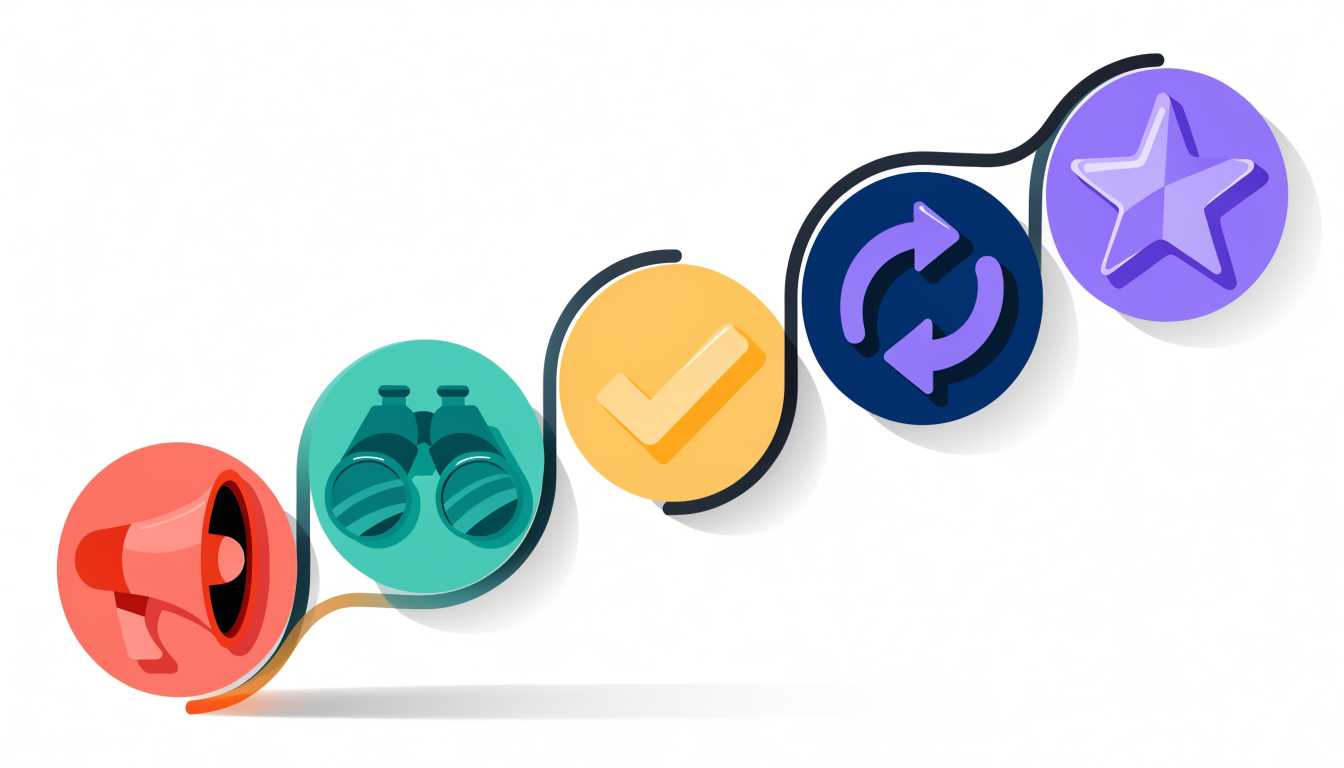
Retention determines lifetime value. Track login frequency, feature adoption (which features do users actually use?), and support interactions. These signals reveal who's at risk of churning before they leave.
Advocacy happens when satisfied customers become your sales team. Monitor reviews posted, referrals generated, and social shares. This stage closes the loop and often carries the highest conversion rates because trust is already established.
The key: track each touchpoint with privacy compliance in mind. Use first-party data collection wherever possible and ensure consent is documented. Your tracking infrastructure should enable real-time action, not just historical reporting.
Setting Up Your Analytics Infrastructure: Step-by-Step
Setting up analytics infrastructure requires methodical planning, not guesswork. You're building the nervous system of your customer understanding, so getting this right compounds every decision downstream.
Step 1: Define your measurement plan and key events. Before touching any tool, map what actually matters to your business. What actions indicate customer progress? For an e-commerce site, that might be product views, add-to-cart, and purchases. For SaaS, it's account creation, feature usage, and upgrade events. Write these down. Be specific. "Engagement" is too vague; "watched tutorial video" is actionable.
Step 2: Choose first-party tracking methods over third-party cookies. This isn't optional anymore. Third-party cookies are obsolete, and privacy regulations like GDPR and CCPA are tightening. Implement first-party data collection through your own servers, CRM, and website tags. You'll own your data, improve accuracy, and stay compliant.
Step 3: Implement event tracking across all touchpoints. This is where precision matters. Track key touchpoints using tools like Google Analytics or CRM data, ensuring every meaningful interaction is captured. Email opens, form submissions, support tickets, social clicks, offline purchases if applicable. Consistency across channels prevents blind spots.
Step 4: Set up attribution modeling to connect touchpoints to outcomes. Multi-touch attribution accounts for the entire customer journey, helping determine which touchpoints lead customers to convert. Don't rely on last-click attribution alone; it's misleading. Test time-decay, linear, or custom models based on your business model.
Step 5: Create dashboards tailored to different stakeholder needs. Your marketing team needs different views than your product team. Build dashboards that answer specific questions: Where are we losing customers? Which campaigns drive qualified leads? What's the revenue per channel? Make them accessible and updated automatically.
Step 6: Establish real-time monitoring and historical analysis views. Your analytics strategy should include both real-time and historical views, with real-time dashboards crucial for monitoring ongoing campaigns and detecting immediate problems. Real-time alerts catch issues before they damage revenue; historical analysis reveals patterns. You need both.
This foundation takes weeks to build properly, not days. But it's non-negotiable for privacy-compliant, revenue-driving customer journey tracking.
Identifying Bottlenecks and Revenue Leaks
Your analytics data holds the answer to where revenue actually disappears. Most companies focus on top-of-funnel metrics, but the real money leaks happen in the middle and bottom stages where friction compounds.
Start by mapping conversion rates at each touchpoint. If your landing page converts at 8% but only 3% of visitors reach checkout, you've found a critical bottleneck. The gap between those numbers represents recoverable revenue. Calculate the actual impact: if 10,000 monthly visitors hit that second stage, a 2% conversion drop costs you roughly $50,000 annually (depending on your average order value).
Compare the journeys of customers who converted versus those who abandoned. Did converters skip steps? Did they spend less time on certain pages? Non-converters often follow different paths, revisiting pages multiple times or clicking on specific elements that signal confusion. Session recordings and heatmaps expose these friction points that raw metrics can't capture alone.

Prioritize fixes by revenue potential, not effort alone. A 1% improvement at your checkout stage might recover 10x more revenue than optimizing an earlier touchpoint with lower traffic. Real-time insights also matter here; reaching customers with timely upsell and cross-sell offers enables revenue optimization throughout their journey. The bottleneck you identify today becomes your highest-impact optimization target tomorrow.
Common Pitfalls and How to Avoid Them
Most organizations stumble on customer journey tracking in predictable ways. The first major mistake is over-relying on third-party cookies and generic tracking IDs. GA4 provides only alphanumeric IDs not directly tied to real people, creating a frustrating disconnect when you're trying to link website behavior with actual customers in your database.
The second pitfall is tracking everything without intention. Teams collect massive datasets on every click, hover, and page scroll, then wonder why their dashboards are slow and insights are buried under noise. You need a clear business purpose before activating any tracking point.
Data silos are another silent killer. Your marketing platform knows one thing, your CRM knows another, and your analytics tool sees something completely different. Without a unified view across channels, you're making decisions on fragmented information that misses the full customer picture.
Then there's the dashboard problem: you've built something beautiful and detailed that only analysts can understand. Business stakeholders need actionable summaries, not 47 metrics and custom segments they can't navigate.
Finally, many teams collect insights but never act on them. The data sits in reports while decisions happen in meetings based on intuition. This is where AI-driven automation bridges the gap, surfacing patterns and triggering actions automatically.
The solution isn't better spreadsheets or more tools. You need a privacy-first approach that makes first-party data your foundation, centralizes information across channels, and puts insights directly into the hands of people who can act. When data is accessible and actionable, your entire organization moves faster.
Frequently Asked Questions About Customer Journey Tracking
Q: How is customer journey analytics different from web analytics?
Web analytics tools track page views, clicks, and user behavior on your website within single sessions or channels. They're useful for understanding what happens on your site, but they can't connect online interactions with offline behaviors or cross-channel activity. Customer journey analytics goes further, mapping how customers move across email, social media, paid ads, your website, and even in-store touchpoints to understand the complete path to conversion.
Q: Do I need to replace Google Analytics completely?
Not necessarily. Google Analytics works well for website performance. The question is whether it gives you the full picture you need. Many businesses run both: GA4 for site-level insights and a dedicated customer journey platform for cross-channel visibility. Evaluate your actual gaps first before making changes.
Q: How do I ensure GDPR and CCPA compliance?
Use first-party data collection with explicit consent, implement transparent privacy policies, and respect user opt-outs. Privacy-first analytics tools can track conversions while relying less on invasive tracking and more on first-party, event-based, or cookieless measurement.
Q: What's the difference between customer journey mapping and analytics?
Customer journey mapping visualizes a typical customer path; analytics measures actual behavior and interactions across channels. Mapping is strategic; analytics is data-driven validation.
Q: How long before I see results?
Most teams see actionable insights within 30 to 60 days once tracking is properly configured and data accumulates.
Q: Can I track journeys without cookies?
Yes. First-party data, server-side tracking, and event-based measurement work effectively without relying on third-party cookies.
The Future of Customer Journey Analytics: AI and Automation
AI is fundamentally reshaping how you understand customer behavior. Rather than manually sifting through data, modern platforms automatically identify patterns that would take your team months to uncover, revealing why customers churn, what triggers conversions, and which segments need immediate attention.
Real-time automation takes this further. The moment a customer shows a critical signal, your system acts without waiting for human intervention. An abandoned cart triggers a personalized recovery sequence. A support ticket signals churn risk, prompting a retention offer. A high-value prospect enters your funnel, and your team gets alerted instantly. Today's platforms integrate real-time data, AI and visualization to empower teams to predict behavior and act on insights faster than ever.
Predictive analytics push this even further, forecasting which customers will leave before they do and recommending the next best action for each individual. This isn't guesswork; it's probability-based strategy.
The privacy-first advantage matters more than ever. You can run sophisticated AI models while maintaining compliance and customer trust, avoiding the false choice between intelligence and responsibility.
Organizations adopting these capabilities now are building competitive moats their competitors won't catch for years. The question isn't whether AI-powered analytics are the future, but whether you're ready to implement them today.
Start Tracking Your Customer Journey Today
Customer journey analytics isn't a nice-to-have anymore; it's what separates businesses that grow from those that stagnate. The data is clear: companies that understand their customers' paths make smarter decisions, retain more customers, and capture revenue they'd otherwise miss.
But here's what matters most right now: you can't build a competitive advantage on outdated tracking methods. Privacy regulations are tightening, customer trust is eroding, and traditional analytics are becoming less reliable. The answer isn't to track more data; it's to track smarter data.
Privacy-first customer journey tracking delivers both compliance and performance. You get cleaner insights, stronger customer relationships, and the ability to act on real-time intelligence without regulatory risk.
The framework is straightforward: map your customer touchpoints, implement first-party data collection, layer in AI-driven insights, and automate your responses. Start with your highest-value segments and expand from there.
You don't need to overhaul everything tomorrow. Begin by auditing your current data sources and identifying the three biggest gaps in your customer understanding. Then implement one tool that consolidates tracking, respects privacy, and surfaces actionable insights automatically.
The businesses winning right now aren't waiting for perfect. They're starting today. Book a free demo to see how a unified, privacy-first approach transforms your customer journey data into revenue growth.
Go deeper in the Learning Hub
Try Arktis free for 7 days
Attribution tracking, session recordings, and AI automation in one platform. Set up in 2 minutes, free for 7 days.
Start 7-day free trial